
Genesis 16 verse 13: She gave this name to the Lord who spoke to her: “You are the God who sees me,” for she said, “I have now seen[a] the One who sees me.”
El Roi, the God who sees me!
In the Book of Genesis, the story of Hagar, an Egyptian slave girl, offers profound insights into the complexities of human relationships and the importance of acknowledging and valuing one another’s worth. Hagar’s journey from being viewed as a mere object to being seen as a person with inherent dignity provides valuable lessons that resonate with us even today. In this article, we will delve into the narrative of Hagar in Genesis 16 and explore what it means to be seen in the contemporary world.
The Pitfalls of Objectification
Hagar’s story begins with her being viewed as a means to an end. Sarai, unable to conceive a child, suggests that her husband, Abram, take Hagar as a surrogate to bear him a child. Hagar becomes a pawn in Sarai’s pursuit of motherhood, reduced to an object whose value lies solely in her ability to fulfil a role.
The Power of Being Seen
As Hagar’s pregnancy progresses, she begins to look down on Sarai, likely perceiving herself as superior due to her new status as a mother-to-be. Sarai, feeling humiliated and mistreated, reacts by harshly treating Hagar, leading to the latter’s escape into the wilderness. However, it is in this desolate place that Hagar experiences a transformative encounter.
Divine Encounter and Recognition
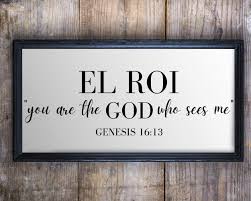
In the wilderness, an angel of the Lord finds Hagar near a spring. The angel speaks to her, acknowledging her struggles and instructing her to return to Sarai. But crucially, Hagar is not merely viewed as an object or a servant by the angel, Hagar is seen by the angel as more than just an object or a servant; she is seen as an individual with her own story, fears, and hopes; she is seen as an individual with her own story, fears, and aspirations. This recognition of her humanity brings comfort and reassurance, as the angel promises her a future filled with blessings and numerous descendants. This is where the name El Roi emanates from; it is translated to the one who sees me.
I particularly took a liking to this commentary on Hagar’s story. It sheds more light on the preceding events that took place well after the birth of Ishmael and shows God’s faithfulness. You may read it for better understanding and context.
To be viewed or to be seen?
Now, we want to delve into the contemporary world and dissect what it means to be seen or viewed. In our fast-paced and interconnected world, it’s easy to fall into the trap of being viewed rather than truly seen. We often prioritise surface-level interactions and virtual connections over genuine relationships. However, the story of Hagar in Genesis 16 reminds us of the importance of being seen, truly understood, and valued as individuals. In this article, we will explore the significance of authentic connections and why it is better to be seen than viewed.
A definition of the two words viewed and seen can help shed light on what it is I am trying to put across today.
To be viewed
To be viewed means to be observed or perceived by others. It refers to the act of being looked at, often in a superficial or surface-level manner. Being viewed emphasises the external aspects of a person, such as their appearance, actions, or social media presence, without necessarily delving into their deeper emotions, thoughts, or individuality. When someone is viewed, the focus is primarily on their external presentation rather than their inner world or personal experiences. This can result in a lack of genuine understanding and connection, as it often revolves around superficial judgements or assumptions based on limited information.
To be seen
To be seen means to be truly recognised, acknowledged, and understood as an individual. It goes beyond superficial observation and delves into a deeper level of connection and perception. When someone is seen, it involves recognising their unique qualities, experiences, emotions, and perspectives. Being seen encompasses understanding a person’s inner world, including their thoughts, beliefs, values, and aspirations. It involves empathy, active listening, and a genuine desire to understand and appreciate the person for who they truly are. Being seen fosters a sense of validation, acceptance, and connection, allowing individuals to feel valued and understood as their authentic selves.
The Superficiality of Being Viewed
In today’s society, we are bombarded with images and curated versions of people’s lives through social media and other platforms. We may find ourselves caught up in the desire to be viewed, seeking external validation and approval. But this focus on being viewed can lead to a shallow existence where our worth is measured by likes, comments, and followers. It doesn’t truly fulfil our need for genuine connection and understanding.
Being Seen: A Path to Authenticity

Hagar’s story highlights the transformative power of being seen. As a slave girl, she was initially viewed merely as a means to an end, a vessel to fulfil the desires of others. However, when Hagar encountered the angel of the Lord in the wilderness, she experienced a profound shift. The angel saw her pain, her struggles, and her hopes. Hagar was recognised as an individual with her own story and worth. This recognition brought her comfort, reassurance, and a renewed sense of purpose.
The Value of Authentic Connections
Emotional Fulfilment: True connections rooted in being seen provide us with emotional nourishment. When we are seen for who we truly are, we feel validated, understood, and supported. These connections offer a safe space to express our thoughts, fears, and aspirations without fear of judgement.
Empathy and Understanding: Being seen fosters empathy and understanding. When we take the time to truly see others, we develop a deeper understanding of their experiences and emotions. This cultivates compassion and allows us to build stronger, more meaningful relationships.
Authenticity and Self-Acceptance: When we are seen, we are encouraged to embrace our authentic selves. We no longer feel pressured to conform to societal expectations or put on a façade. Instead, we can embrace our strengths, vulnerabilities, and complexities, leading to greater self-acceptance and personal growth.
Cultivating Authentic Connections:

Active Listening: Truly listen to others, seeking to understand their perspectives and experiences. Show genuine interest in their stories and emotions. Whether on video call or otherwise in person, active listening can be practised. I have an example of a cousin who fell ill in the diaspora. Everyone would check up on her via video calling and direct voice calls, however, no one ever went to see her. Aside from the physical act of going to visit and see her, no one paid attention to the pitch in her voice, or saw the frailness or the weakness. When she passed away everyone was shocked, but the truth of the matter is that we had not seen her, we simply viewed her and ultimately the family lost her. Had there been someone to actively pick up on the emotions and truly see her, maybe just maybe, we could have intervened in time to save her life.
Empathy and Validation: Practice empathy and validate others’ feelings. Acknowledge their experiences without judgement, offering support and understanding.
Vulnerability: Be willing to open up and share your own thoughts and feelings. This vulnerability encourages others to do the same, deepening connections.
To wrap up
In a world that often prioritises being viewed over being seen, it is essential to shift our focus and embrace authentic connections. The story of Hagar reminds us of the transformative power of being seen for who we truly are. By cultivating genuine relationships rooted in empathy, understanding, and vulnerability, we can experience emotional fulfilment, personal growth, and a stronger sense of belonging. Let us choose to be seen and to see others, fostering a more compassionate and connected world. If there is a friend or relative that you have not seen in a while, get on the phone and invite them for lunch.
Here’s to being seen!
Reg
Are you being seen or heard? Please share your experiences in the comments section. Remember, the views matter here, so please leave a like and subscribe for more thought-provoking and engaging content!


13 replies on “It’s better to be seen than to be viewed!”
[…] September 4, 2023Ritah Musanhi It’s better to be seen than to be viewed! […]
LikeLike
👏👏 Truly it is better to be seen than to be viewed! This just opened my eyes to how I’ve been settling with being “viewed” and “viewing” others when being “seen” actually exists.
LikeLike
Amen
LikeLike
Thank you! Being seen is not just about physical visibility, it’s about being recognised and valued as a human being.
LikeLiked by 1 person
Beautiful
LikeLike
Be blessed
LikeLike
🔥🔥🔥
LikeLike
Thank you be blessed
LikeLike
Be blessed 🙏🏾
LikeLike
This is profound.
LikeLike
Powerful thank you
LikeLike
🔥🔥🔥🔥🔥🔥🔥
LikeLiked by 1 person
Powerful
LikeLiked by 1 person